
Baby Feeding Chart: A Parent-Friendly Guide from Newborn to 12 Months
Feeding a baby is not a straight line. It is a daily conversation between a parent and a child. Some days are calm. Some days feel like one long feeding session. A baby feeding chart can help parents see the pattern behind these changes and feel less lost in the first year. Many parents do not need another strict rule. They need a gentle map. A baby feeding chart gives that map: when babies usually feed, how milk needs may shift, when solid foods may enter the routine, and which signs show hunger or fullness.

The question parents ask most often is simple: how much should a baby eat? The answer is not one perfect number. It depends on age, feeding method, growth, health, sleep, development, and appetite. That is why this guide combines a baby feeding chart, a flexible newborn feeding schedule, and a clear baby feeding schedule by age.
In this article, you will find:
- a practical baby feeding chart for the first year;
- a realistic newborn feeding schedule for the early weeks;
- a calm baby feeding schedule by age from birth to 12 months;
- signs that show when a baby is hungry or finished;
- tips for starting solids around 6 months;
- common feeding worries and what to discuss with a pediatrician.
This guide is educational. It does not replace medical care. If your baby was born premature, has feeding difficulties, allergies, reflux, poor weight gain, dehydration signs, or any diagnosed condition, personalize any baby feeding chart with your pediatrician or qualified healthcare provider.

Why a Baby Feeding Chart Helps Parents Feel Grounded
A baby feeding chart is helpful because babies change quickly. A newborn may eat very often because their stomach is small and their body is adapting to life outside the womb. A 6-month-old may still need plenty of milk while learning to taste food. A 10-month-old may enjoy soft family foods but still want breast milk or formula several times a day.
The CDC explains that babies differ in how much and how often they feed, and feeding depends on the baby’s needs. In the early weeks, many breastfed babies feed 8–12 times in 24 hours, especially while breastfeeding is being established.
That is why a baby feeding chart should not work like a clock. It should work like a compass. It points parents in a helpful direction, but it does not replace observation.
A good baby feeding chart helps parents notice:
- how often feeds usually happen;
- whether a baby seems satisfied after feeds;
- how feeding changes with age;
- when solid foods may be introduced;
- when a question should be discussed with a clinician.
The goal is not to make every baby follow the same routine. The goal is to make feeding easier to understand.
Baby Feeding Chart by Age: The First-Year Map
Use this baby feeding chart as a broad first-year overview. It is not a prescription. It is a starting point for calm planning.
| Baby’s age | Main food source | Daily feeding rhythm | Solids | What parents usually watch |
| 0–1 month | Breast milk or infant formula | Frequent feeding, often day and night | Not yet | Wet diapers, weight checks, latch or bottle comfort |
| 1–3 months | Breast milk or infant formula | Feeds may still be frequent but can slowly space out | Not yet | Hunger cues, fullness cues, steady growth |
| 3–5 months | Breast milk or infant formula | Some babies take larger feeds and longer breaks | Usually not yet | Readiness signs closer to 6 months |
| Around 6 months | Milk plus early complementary foods | Milk remains central; small food tastes begin | Yes, if ready | Sitting support, head control, swallowing |
| 7–9 months | Milk plus soft foods | Milk feeds plus 1–3 small meals | Yes | Texture practice, iron-rich foods, safe pieces |
| 10–12 months | Milk plus family-style soft foods | Meals become more regular | Yes | Variety, self-feeding, safe routine |
This baby feeding chart can answer many everyday questions, but it cannot see your baby. Your baby’s cues matter. Growth checks matter. Medical advice matters.
The strongest baby feeding schedule by age is flexible enough for real family life.
Newborn Feeding Schedule: What the First Weeks Often Look Like
The first month can feel intense. A newborn feeding schedule may not look like a schedule at all. It may look like feeding, burping, changing, soothing, sleeping, and starting again.
This is expected for many families. A newborn has a tiny stomach, and early feeding is frequent. CDC guidance notes that newborns do not need large amounts at each feeding in the first days. For formula-fed newborns, the CDC says babies may start with 1–2 ounces every 2–3 hours in the first days.
A flexible newborn feeding schedule may include:
- feeding when early hunger cues appear;
- expecting frequent feeds across 24 hours;
- waking a very sleepy newborn if a clinician recommends it;
- watching wet diapers and stool patterns;
- keeping early weight checks;
- asking for help if feeding feels painful, stressful, or ineffective.
The first weeks are not about creating a perfect routine. They are about helping the baby feed safely and helping parents gain confidence.
Early Hunger Signs in a Newborn
A baby feeding chart gives timing, but hunger cues give the moment. A newborn may show hunger by:
- turning the head toward the breast or bottle;
- opening the mouth;
- licking lips;
- sucking on fingers;
- becoming more alert;
- moving arms and legs more actively;
- making soft sounds.
Crying can be a later hunger cue. Feeding before crying becomes intense may make the newborn feeding schedule calmer for both baby and parent.
Fullness Signs in a Newborn
A baby may be finished when they:
- release the breast or bottle;
- slow active sucking;
- relax the hands;
- turn the head away;
- fall asleep after feeding actively;
- look settled.
When parents ask how much should a baby eat, these signs are part of the answer. Babies do not only communicate with ounces. They communicate with their whole body.
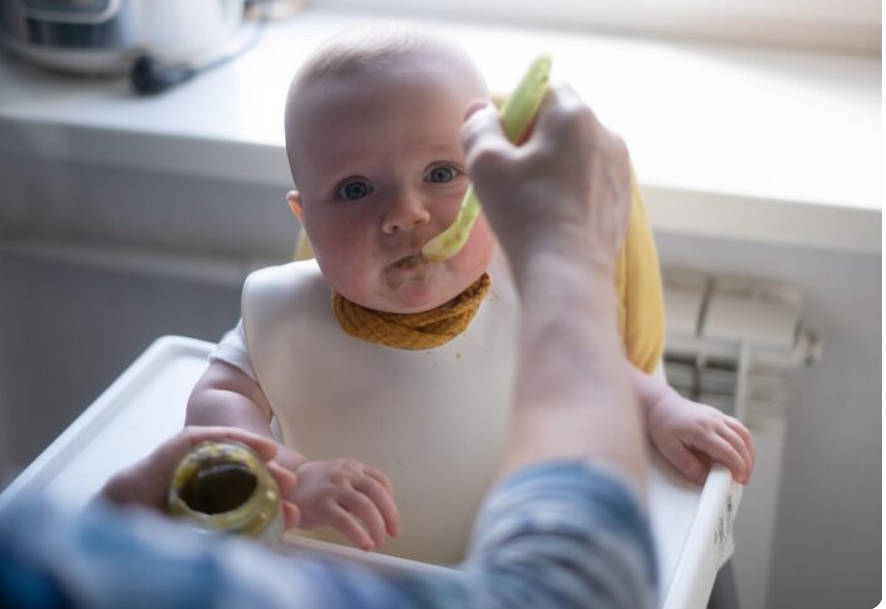
How Much Should a Baby Eat in the Newborn Stage?
The question how much should a baby eat is especially common in the first month. Parents want reassurance that the baby is getting enough.
For formula-fed newborns, early amounts are usually small and increase over time. For breastfed newborns, exact ounces are harder to see, so parents and professionals often look at the bigger picture: feeding frequency, swallowing, diapers, weight, and alertness.
A baby feeding chart for newborns should include more than feeding times. It should include signs that feeding is working.
Helpful things to track in the early days:
- number of feeds;
- wet diapers;
- stool changes;
- baby’s energy;
- baby’s behavior after feeding;
- any pain during breastfeeding;
- any difficulty with bottle feeding.
If a newborn is very sleepy, hard to wake, has too few wet diapers, seems weak, or feeds poorly, parents should contact a healthcare professional promptly.
Baby Feeding Schedule by Age: 1 to 3 Months
From 1 to 3 months, many babies begin to show a little more rhythm. Some still feed often adn some take larger feeds and longer naps. Some cluster feed in the evening.
A baby feeding schedule by age for this stage may include:
- milk as the only food;
- cue-based breastfeeding;
- formula bottles based on hunger and fullness signs;
- night feeds when needed;
- no solid foods yet;
- regular pediatric growth checks.
A baby feeding chart can help parents understand that feeding variation is expected. One day may feel smooth. Another may include more frequent feeds. Babies grow in waves, not in perfectly even steps.
Example Routine for 1–3 Months
A gentle day may look like this:
- milk feed after waking;
- milk feed before or after a morning nap;
- midday feed;
- afternoon feed;
- evening feed or cluster feeding;
- night feeds as needed.
This is not a rule. It is only a sample. The best baby feeding schedule by age is the one that fits the baby’s cues, the family’s rhythm, and medical guidance.
Baby Feeding Chart for 3 to 5 Months
Between 3 and 5 months, feeding may feel more familiar. Babies may become more alert, more social, and more distracted. Some babies pause often during feeds because the world is suddenly interesting.
A baby feeding chart for 3–5 months still centers on breast milk or infant formula. Solid foods are usually not part of the routine yet. The CDC states that the Dietary Guidelines for Americans and the American Academy of Pediatrics recommend introducing foods other than breast milk or infant formula at about 6 months.
At this stage, parents may notice:
- longer awake windows;
- stronger head control;
- more interest in family meals;
- more efficient feeding;
- distracted feeding in busy rooms;
- occasional appetite changes.
Interest in food is not the same as readiness. A baby feeding chart should remind parents to look at development, not only curiosity.
Around 6 Months: When the Baby Feeding Chart Begins to Include Food
Around 6 months, many babies are ready to begin complementary foods. “Complementary” means these foods are added to breast milk or formula, not used to replace milk all at once. CDC materials describe these foods as complementing breast milk or infant formula that parents continue to feed.
A baby feeding chart around 6 months may include:
- breast milk or formula several times daily;
- one small food session at first;
- soft textures;
- iron-rich foods;
- patient, low-pressure meals;
- close supervision.
The baby feeding schedule by age now becomes more interesting, but also more flexible. Some babies love food quickly and some need time. Some taste, make a face, and try again next week.
Signs Baby May Be Ready for Solids
According to CDC guidance, signs of readiness include sitting with support, controlling the head and neck, opening the mouth when food is offered, swallowing food instead of pushing it out, and bringing objects to the mouth.
Parents can watch for:
- sitting with support;
- steady head and neck control;
- interest when food is offered;
- ability to move food back and swallow;
- less tongue-thrusting;
- reaching for objects and bringing them to the mouth.
A baby feeding chart should include these signs because age alone is not enough.
НУЖНА КАРТИНКА: checklist “Ready for Solids?” with sitting, head control, open mouth, swallowing, interest
Baby Feeding Chart for 6 to 8 Months
At 6–8 months, feeding becomes a mix of milk and early food exploration. Milk remains very important. Food adds taste, texture, iron, and mealtime practice.
A practical baby feeding chart for 6–8 months may look like this:
- breast milk or formula remains the main source of nutrition;
- 1 small meal may begin;
- some babies move toward 2 small meals;
- foods are soft and safe;
- meals are short and calm;
- water may be offered in small amounts with meals if your pediatrician agrees.
Early food ideas:
- iron-fortified infant cereal mixed with breast milk or formula;
- mashed lentils;
- soft cooked sweet potato;
- mashed avocado;
- plain yogurt without added sugar;
- soft fruit;
- finely shredded soft meat;
- egg prepared in a safe texture.
When parents ask how much should a baby eat at this stage, the answer may be “less than you expect.” A few small tastes can be meaningful. The baby is learning how food feels, smells, moves, and tastes.
The baby feeding schedule by age should make room for mess. Mess is not failure. It is sensory learning.
Baby Feeding Chart for 8 to 10 Months
At 8–10 months, many babies become more active participants at meals. They may reach for the spoon, squish food, drop pieces, and try to feed themselves.
A baby feeding chart for this stage often includes:
- breast milk or formula several times daily;
- 2–3 small meals depending on interest;
- thicker mashed foods;
- soft finger foods;
- more texture;
- safe family foods with little or no added salt or sugar;
- constant supervision.
HealthyChildren.org, from the American Academy of Pediatrics, notes that within a few months of starting solid foods, a baby’s diet should include a variety of foods. It also emphasizes that finger foods should be soft, easy to swallow, and cut into small pieces to reduce choking risk.
Good texture options may include:
- soft pasta pieces;
- mashed beans;
- soft cooked vegetable pieces;
- ripe pear strips;
- scrambled egg pieces;
- shredded chicken;
- flaked fish with bones removed;
- thick oatmeal.
At this stage, how much should a baby eat varies widely. Some babies eat more solids in the morning and some prefer dinner. Some eat a little at each meal. The pattern over several days matters more than one plate.
Baby Feeding Chart for 10 to 12 Months
By 10–12 months, the feeding day often begins to look more like a family routine. A baby may have breakfast, lunch, dinner, and small snacks, while still receiving breast milk or formula.
A baby feeding schedule by age for 10–12 months may include:
- milk feed after waking;
- breakfast with soft foods;
- small snack or milk feed;
- lunch;
- afternoon milk or snack;
- dinner with the family;
- bedtime milk if it fits the routine.
Bbaby’s feeding chart at this age should focus on variety and safety. Babies may want to self-feed more. They may refuse foods they accepted before. They may eat more on some days and less on others.
This is not a reason to panic. A calm feeding routine helps babies learn trust, appetite awareness, and participation in family meals.

How Much Should a Baby Eat? A Better Way to Think About Amounts
Parents search how much should a baby eat because they want a number that removes worry. Numbers can help, especially with formula. But babies are not identical.
HealthyChildren.org gives a general guide for formula-fed babies of about 2½ ounces of formula per pound of body weight per day, while also noting that babies usually regulate intake from day to day and parents should discuss consistently high or low intake with a pediatrician.
That is why the best baby feeding chart uses three layers:
- Age — newborn, young infant, older baby, almost toddler.
- Cues — hungry, satisfied, tired, distracted, uncomfortable.
- Growth and health — weight checks, diapers, energy, medical context.
The question how much should a baby eat becomes easier when parents stop looking at one feed and start looking at the full pattern.
Hunger Cues
A baby may want more when they:
- open the mouth toward food;
- root toward the breast or bottle;
- suck actively;
- reach toward food;
- lean forward in the high chair;
- stay alert and interested;
- continue showing hunger after a pause.
Fullness Cues
A baby may be finished when they:
- turn the head away;
- close the mouth;
- slow sucking;
- push food away;
- lose interest;
- become fussy at the meal;
- relax the body;
- stop opening for another bite.
A responsive baby feeding chart respects both hunger and fullness. It does not ask parents to force the last ounce or the last spoon.

Breastfeeding, Formula Feeding, and Mixed Feeding
A baby feeding chart should support different feeding paths. Babies can thrive with breastfeeding, formula feeding, pumped milk, mixed feeding, or a medical feeding plan. Families deserve practical information without judgment.
Breastfeeding
For breastfeeding families, a newborn feeding schedule often begins with frequent feeds. The focus is usually on latch, swallowing, comfort, diapers, and growth. As babies get older, some feeds become faster and more spaced out.
CDC breastfeeding guidance states that every baby is different and that feeding frequency depends on individual needs.
A breastfeeding baby feeding chart should not make parents feel that every feed must be timed and measured. It should help them see whether feeding is effective and whether support is needed.
Formula Feeding
Formula feeding can make intake more visible because parents can see ounces in the bottle. Still, a baby may not drink the same amount at every feed.
A formula-based baby feeding chart should include:
- safe formula preparation;
- bottle amounts as a guide;
- hunger cues;
- fullness cues;
- pediatric advice for unusual patterns;
- lower formula needs as solids increase later in infancy.
The CDC notes that as babies gradually eat more solid foods, they gradually need less infant formula.
Mixed Feeding
Mixed feeding may include breastfeeding, expressed milk, and formula. A baby feeding schedule by age can still help, but parents may track patterns instead of exact totals.
Useful notes may include:
- number of breastfeeds;
- bottle amounts;
- pumping times if relevant;
- baby’s mood after feeding;
- diapers;
- solids offered;
- any symptoms or concerns.
The best baby feeding chart is the one that helps the parent feel informed, not judged.
Starting Solids Without Pressure
The first bites are not a performance. They are practice. A baby may lick food, spit it out, grab the spoon, or look confused. That does not mean anything is wrong.
A baby feeding chart should prepare parents for a slow beginning. Early feeding skills include:
- sitting safely;
- opening the mouth;
- moving food around;
- swallowing;
- touching textures;
- smelling foods;
- joining the family at meals.
Parents can offer small amounts and stop when the baby shows fullness. This supports trust and reduces mealtime tension.
First Foods to Consider
Many families begin with soft, simple foods. Examples include:
- iron-fortified infant cereal;
- mashed beans;
- lentils;
- soft vegetables;
- mashed fruit;
- egg in a safe texture;
- plain yogurt;
- soft meat or fish.
The CDC notes that, for most children, foods do not need to be introduced in a specific order when complementary foods begin around 6 months.
A baby feeding chart should encourage variety over time, not a perfect menu from day one.
Feeding Safety Basics Every Parent Should Know
Safety belongs in every baby feeding chart. Babies are learning coordination, and parents need to reduce risk.
Important safety habits:
- always seat the baby upright for solids;
- stay close during meals;
- avoid hard, round, sticky, or large pieces;
- cook firm vegetables until soft;
- cut food into safe shapes and sizes;
- remove bones from fish and meat;
- avoid honey before 12 months;
- avoid putting cereal in bottles unless a clinician instructs you;
- prepare infant formula exactly as directed;
- clean bottles, nipples, bowls, and spoons carefully.
The AAP advises avoiding bottle propping and using only breast milk or formula in bottles unless otherwise directed by a physician. It also notes that inattention to hunger and satiety cues can be linked with overfeeding.
A safe baby feeding schedule by age is not only about nutrition. It is also about posture, supervision, texture, and calm pacing.
Common Mistakes When Using a Baby Feeding Chart
A baby feeding chart should make life easier. It should not become another source of pressure.
Mistake 1: Treating the Chart as a Test
If a baby eats less than the chart once, it does not automatically mean there is a problem. Look at the full day, several days, diapers, energy, and growth.
Mistake 2: Comparing Babies
One baby may drink larger bottles. Another may prefer shorter, more frequent feeds. One baby may enjoy textures quickly. Another may need many gentle exposures.
The baby feeding schedule by age gives a range. It does not rank babies.
Mistake 3: Starting Solids for Sleep
Some parents hear that cereal or early solids will make a baby sleep longer. The AAP discusses that families may add cereal to bottles hoping for longer sleep, but it advises only breast milk or formula in bottles unless a physician directs otherwise.
Mistake 4: Pushing “Just One More Bite”
Pressure can make feeding stressful. Babies learn better when adults offer food calmly and respond to cues.
Mistake 5: Forgetting That Milk Still Matters
During the first year, breast milk or infant formula remains central. Solids are added gradually. A baby feeding chart should not rush the transition.

Practical Block: Build Your Own Feeding Rhythm
Here is a simple way to use a baby feeding chart at home without turning the day into a spreadsheet.
Step 1 — Observe the Current Pattern
For two or three days, notice what already happens.
Write down:
- when milk feeds happen;
- how your baby acts before feeding;
- how your baby acts after feeding;
- diaper patterns;
- sleep changes;
- solid foods offered, if your baby has started them.
This helps you understand your baby before changing the routine.
Step 2 — Compare Gently with Age
Look at a baby feeding schedule by age and ask:
- Is my baby in a milk-only stage?
- Is my baby close to starting solids?
- Are feeds frequent because of age or hunger cues?
- Does the day feel manageable?
- Do I see any signs I should discuss with a pediatrician?
Use the baby feeding chart as a guide, not as a verdict.
Step 3 — Create Simple Anchors
A routine does not need to be rigid. It may have only a few anchors:
- milk after waking;
- milk before or after naps;
- one small food session for a baby starting solids;
- family dinner with safe baby foods;
- bedtime feed if it fits your family.
For a newborn feeding schedule, the anchor may simply be: feed when hungry, check diapers, support sleep, repeat.
Step 4 — Add Foods Slowly
When your baby is around 6 months and showing readiness, begin with small portions. Offer soft, safe foods. Keep milk feeds. Watch the baby’s face, hands, posture, and interest.
A baby feeding chart can suggest timing, but your baby shows pace.
Step 5 — Review Every Few Weeks
Feeding changes quickly. The newborn feeding schedule will not fit a 4-month-old. The 6-month routine will not fit an 11-month-old.
Every few weeks, review:
- milk feeds;
- solids;
- textures;
- appetite;
- self-feeding;
- safety;
- pediatric guidance.
A baby feeding chart works best when it grows with the baby.
Parent Checklist: A Calm Feeding Reset
Use this checklist when feeding starts to feel confusing.
- I use the baby feeding chart as a guide, not a rule.
- I know my baby’s early hunger cues.
- I know my baby’s fullness cues.
- I keep breast milk or formula central during the first year.
- I do not pressure my baby to finish a bottle or plate.
- I introduce solids around 6 months when readiness signs appear.
- I choose soft, safe textures.
- I supervise meals closely.
- I avoid honey before 12 months.
- I ask a clinician about poor feeding, vomiting, dehydration signs, choking concerns, allergies, or growth worries.
- I remember that how much should a baby eat depends on age, cues, growth, and health.
Support Your Child’s Everyday Development with KidsUP
Feeding is one part of a child’s early development. Play, movement, speech, attention, emotional connection, sleep, and daily routines all grow together.
The KidsUP app helps parents bring age-appropriate activities into everyday life. It gives families simple ideas for learning, play, and development without making parenting feel like a checklist.
Download the KidsUP app to build warmer daily routines and support your child’s development step by step.
FAQ
What is a baby feeding chart?
A baby feeding chart is an age-based guide that shows how feeding may change during the first year. It usually includes milk feeds, solids, feeding frequency, hunger cues, fullness cues, and safety reminders.
What should a newborn feeding schedule look like?
A newborn feeding schedule is usually frequent and flexible. Many newborns feed often during the day and night. Breastfed babies may feed very frequently in the early weeks, and formula-fed newborns may begin with small bottles every few hours. Medical guidance matters, especially in the first days.
How much should a baby eat each day?
The answer to how much should a baby eat depends on age, feeding method, growth, cues, and health. Formula amounts can be easier to estimate, while breastfeeding is often assessed through feeding frequency, diapers, swallowing, comfort, and weight gain.
When should I start using a baby feeding schedule by age?
You can use a baby feeding schedule by age from birth, but it should stay flexible. In the newborn stage, feeding is usually cue-based and frequent. As the baby grows, the schedule may slowly include longer gaps, solids, meals, and snacks.
When can babies start solid foods?
Many babies are ready for foods other than breast milk or formula at about 6 months. Readiness signs include sitting with support, steady head and neck control, opening the mouth for food, swallowing, and showing interest.
What if my baby eats less than the baby feeding chart says?
One small feeding day is not always a concern. Look at the full pattern: diapers, energy, mood, illness signs, and growth. If your baby consistently eats much less, has fewer wet diapers, vomits often, seems weak, or you feel worried, contact your pediatrician.
Conclusion
A baby feeding chart gives parents a calmer way to understand the first year. It shows how feeding can move from a frequent newborn feeding schedule to a more varied baby feeding schedule by age with milk, meals, textures, and family routines.
The question how much should a baby eat does not have one universal answer. A baby’s needs depend on age, development, feeding method, health, growth, and cues. A chart can guide you, but your baby’s signals and your pediatrician’s advice complete the picture.
Save this baby feeding chart, return to it during feeding transitions, and use it as a supportive tool — not a source of pressure.
Material is based on the following sources:
- CDC — breastfeeding frequency and early feeding expectations.
- CDC — infant formula feeding amounts and frequency.
- CDC — introducing solid foods and signs of readiness.
- CDC — complementary foods around 6 months.
- HealthyChildren.org / American Academy of Pediatrics — formula amounts and responsive feeding.
- American Academy of Pediatrics — infant feeding practices and bottle-feeding guidance.


Comments